Gail Godwin
Godwin HomeGail GodwinGodwin WritingsGodwin MusicGodwin ArtworkGodwin InterviewsStudiesGodwin Contact
Queen of the Underworld

Welcome Letter
 

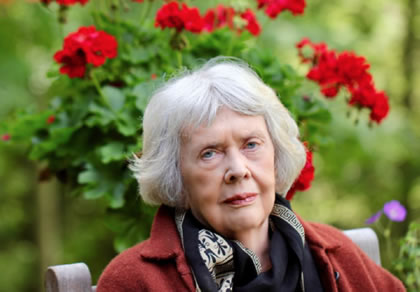
photo by Jerry Bauer

A 2006 Welcome from Gail Godwin

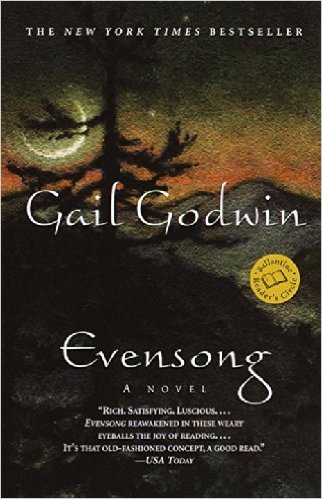
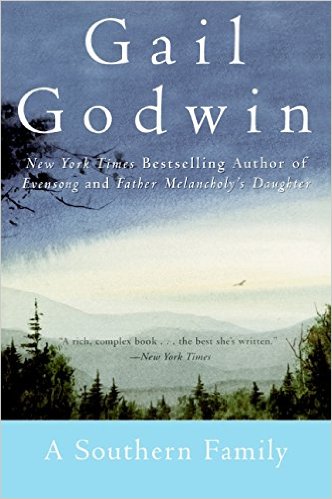
First things first. Thank you for so many interesting e-mails. As some of you know, I have now become an aficionado of e-mail and a deft practitioner of the form and try to respond in time for your book club meetings and class presentations. As some others of you know, I won’t do your homework or tell you the meaning of a story or novel. Recently, I have received a number of queries about A Southern Family. That novel seems to be enjoying a revival. Some of your questions were so fascinating that, to do justice to them, I decided to read the novel “as a reader” for the first time. I ended up loving and actually admiring it, and I owe the experience to you!

Now it’s November, 2006, and I’ve had this web site for five years. I’ll leave my 2004 welcome posted because I still like looking at some of the pictures. My assistant Marie Duane has a few more gray hairs (I hope not all caused by me) but otherwise looks her svelte, efficient self. Beloved Ambrose the Cat, who appeared in Heart, led a noble life till the age of 18 and is now buried alongside his brother Felix in the garden. As of last year, I have two new roommates, Zeb and Waldo, twin brothers.

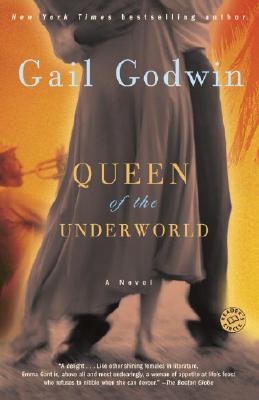
My next engagement is in Washington, D.C. on Friday, April 20, 2007, for the upcoming Pen Faulkner Reading Series at the Folger Library. The topic is “Portrait of the Artist as a Young Woman,” and joining me will be novelists Jennifer Egan and Kate Lehrer, with Deborah Tannen moderating. In preparation for this event, and to answer some provocative questions from readers and critics of Queen of the Underworld (my portrait of the artist as young woman) I have written an essay, “The Female Apprentice Novel: Is This Young Woman Worth Writing About Or Should She Get Over Herself?” You will find it posted on this updated site.

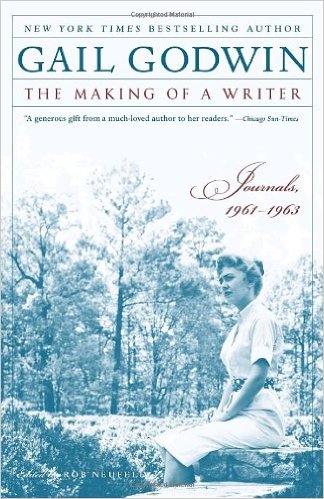
Rob Neufeld and I are busy at work on Volume 2 of The Making of a Writer, journals from 1963-1970, scheduled for publication in 2008 along with my novel The Red Nun: A Tale of Unfinished Desires.

If you click on my drawings, you will see some new characters from The Red Nun as they have formed in my head. These include a class portrait of the “Toxic Ninth Grade” that almost brought down the noble institution of Mount Saint Gabriel’s. The Red Nun is going to be a bigger novel than I’d first planned, covering many generations and many points of view, including God’s. After working on it for a year, I realized it needed a frame, and so eighty-five-year-old Mother Suzanne Ravenel, as she dictates her memoir of the school’s history, will be that frame.

Random House generously included my younger brother Rebel Cole on my January 2006 book travels for Queen of the Underworld and The Making of a Writer: Volume One. (Read more about the book tour in my New Orleans Address to the American Librarians in June: “The Two Faces of Authorship in 2006.”) Rebel (named after a great uncle, a Texas rancher) is a professor of finance at De Paul University and also does contract work for the International Money Fund, so he is quite a world traveler and was the ideal companion and guide. He is 21 years my junior and we haven’t spent long periods of time together, so this was an adventure for both of us. He had some trenchant ideas about today’s publishing business -- from his economist’s point of view. See the New Orleans address for that, too.

We began the book tour in Miami and stayed at the Delano on South Beach. It was my first return to the city since I left in 1960, after my time as a reporter on the Miami Herald. South Beach, which used to go by the nickname “God’s Waiting Room,” because of its elderly population, has now become the haunt of the ur-trendiest of young revelers. (Rebel to me: “I saw Paris Hilton in the lobby last night.” Ancient Sister to Rebel: “Who is Paris Hilton?”)

The high point of my Atlanta part of the tour was visiting the English classes at North Gwinnett High School. Next time anybody wails, “Young people don’t read novels anymore,” I can answer, “But they do, if you give them their own spanking-new copies, equip them with the basic tools of discernment and judgement, and allow them enough time to immerse themselves in the story.” By the time I arrived in the classroom, my work had been mostly done for me. The PEN/Faulkner “Writers in Schools” program had shipped 27 free hardback copies of my new novel, and the class members had been given ample time to read it and discuss it with the teacher and with one another. At the end of my hour and a half with them, they presented me with a scrapbook which represented hours and hours of imaginative engagement with Queen of the Underworld. Drawings of the characters. Poems taking off from the novel. Even a mockup page from Emma’s newspaper. Here are some excerpts from the letter on the final page of the scrapbook:

Dear Ms. Godwin:

Every Friday, a dozen or so of the North Gwinnett High School students meet in Room 122 to write and discuss writing. Each year we publish a literary magazine at our school. We cannot imagine a world without writing, and we live for literary discussion.

When we found out you would be visiting our school, we were ecstatic. Though I have to admit some of our happiness was due to the hardback copies of your novel, we were mostly excited for this opportunity to talk to a person who is living many of our dreams. Even before your arrival, Queen of the Underworld has led to many meaningful discussions about diction, tone, and effective style . . . many members were intrigued by your use of form and how you broke down each section of the novel with Spanish quotes . . .

Sometimes it seems that everything in today’s society is commercialized. It is rare that a successful writer will take the time to visit with high school students and to engage in one-on-one dialogue with a group of teenagers.

In “The Two Faces of Authorship,” which I delivered to the American Librarians Association -- the first group to hold a convention, twenty-thousand strong(!) in New Orleans since the devastation left by Hurricane Katrina -- are my thoughts and feelings about living the double life of a writer today. Being an introvert with a preternaturally long attention span, I am happiest where I find myself “faceless” at home, going each morning into a world that waits for me to give it more shape and explain it to itself, chapter by chapter. But when The Red Nun is finished, health and fate allowing, I’ll be ready for another bracing plunge into Out There -- whatever will be out there in 2008.

I am still trying to absorb my June 2006 trip to New Orleans, a favorite city visited many times, starting in my wild twenties. It is the place that taught me the romance of staying out all night, sipping absinthe in moss-festooned courtyards, eating raw oysters, hearing jazz on the street, buying from a sidewalk artist an ink and watercolor drawing of a house on stilts by the levee, and reviving myself with chicory coffee at dawn -- plus all those hours of writer-talk at the Tennessee Williams Literary Festival in the French Quarter. But now I’m mulling over New Orleans’s newest lesson to me during my visit there ten months after Katrina. It has to do with the SPECIFIC aspect of disaster. Jed Horne, an editor at the Times-Picayune, author of Breach of Faith: The Near-Destruction of a Great American City, took time off from his many commitments to drive some of us through the worst-hit areas of the storm. When viewed from close up, a disaster is no longer as sweepingly bearable. It’s no longer the sea of roofs patched with blue tarpaulins as observed from our descending plane. Seen on ground level, street by street, each battered and ruined thing greets the appalled eye with its singular tale. The live oak survived the brackish waters; the magnolia withered and died. A particular boat upends itself on a crushed house; what’s left of another house sits on top of a particular car. Books that once had pages that someone lovingly turned -- pages that may have changed a life -- are matted and mashed into sculptures of black mold. A solitary toilet faces the street, and behind the toilet, on that house’s single remaining wall, hangs a calendar, stopped at August 2005. How individual and personal each loss is, even the numbers in the orange quadrants spray-painted on each house: how many bodies found; how many pets. There is no such thing as a “group disaster,” these things say, each in its turn. Every heartbreak is one of a kind. You can’t help feeling like a voyeur as you gaze on the aftermath of someone else’s one-of-a-kind tragedy. It was on this grim drive that I finally understood the woman who once admitted to me: “For a year after my house burned down, I couldn’t bear to talk to anyone whose house had not burned down.”

I had no camera, but Henry Neufeld, Rob’s sixteen year old son did. Here, with his permission, are two of his pictures from that weekend, ten months after Katrina. The pink house has stayed with me because it tells its tale of ruin, and then boldly asserts its right to a future. I can be saved. Please do not raze me to the ground. Call this number.

Let me continue to hear from you. Tell me what you’re reading and what is on your mind.

May we all keep alert and be kind to one another in these interesting times!

Gail Godwin


Home | Gail Godwin | Writings | Music
Artwork | Author Interviews | Studies | Contact

Copyright ©2001-2007 Gail Godwin
Designed by FSB Associates

Gail Godwin author of
Queen of the Underworld & Evenings at Five